- Amalgam Carriers Guns, Retainers & Bands
- Composite Placement, Plastic Filling Instruments
- Dental Excavators
- Tweezers, Needle Holders & Scissors
- Crown Remover Instruments
- Dental Elevators
- Dental Forceps
- Dental Implants
- Dental Instruments Set
- Dental Pliers
- Dental Retractors
- Dental Spatulas
- Extraction Forceps
82 Advanced Rhinoplasty Instruments for Perfect Precision and Safety

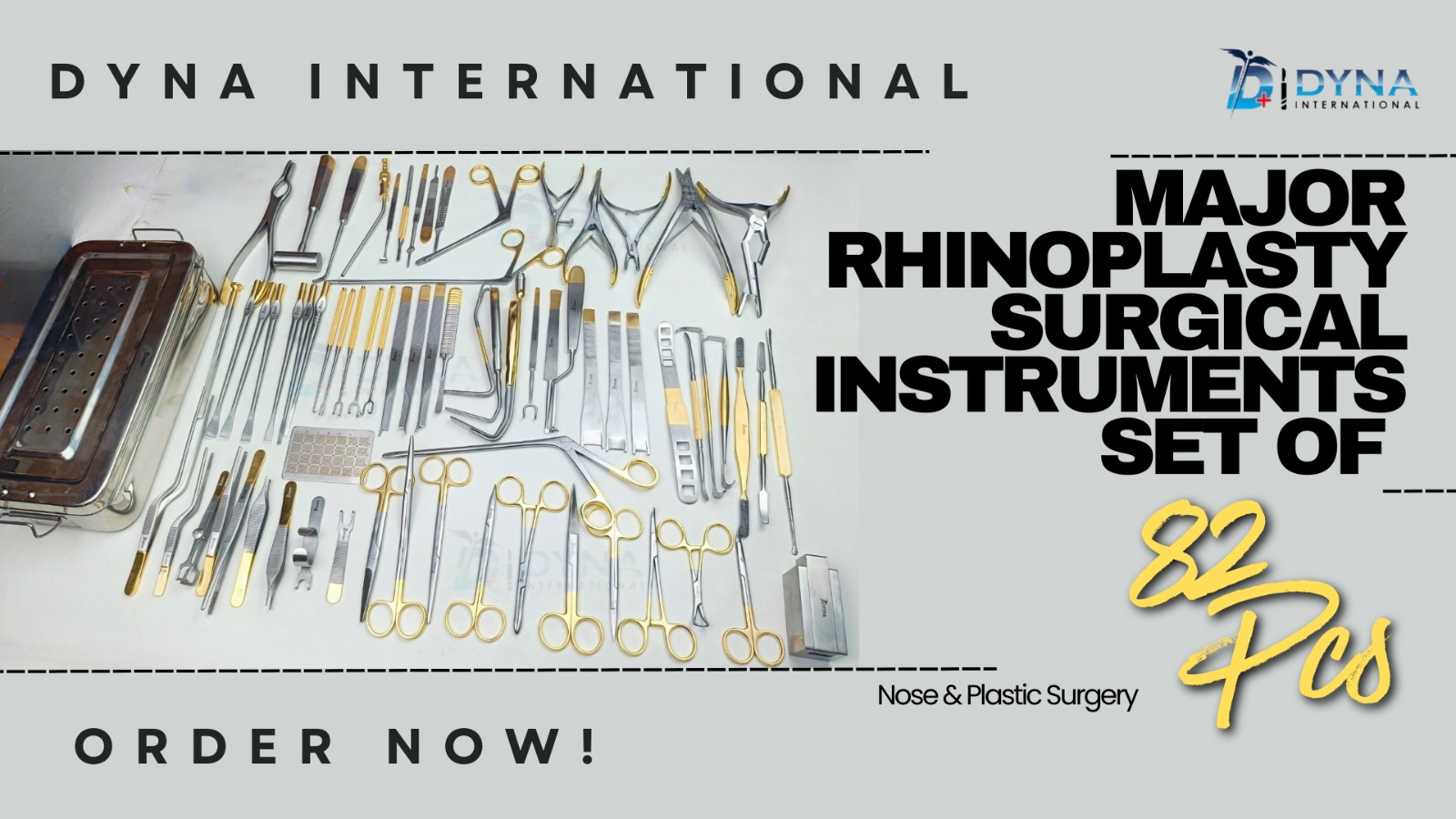
Rhinoplasty is one of the most precision-driven procedures in modern plastic and reconstructive surgery. A fraction of a millimeter can determine whether a nose looks natural or requires revision. That level of accuracy is impossible without the right rhinoplasty surgical instruments.
From reshaping delicate nasal cartilage to refining nasal bone structure, surgeons rely on a carefully selected set of specialized rhinoplasty tools. Each instrument plays a vital role in ensuring surgical precision, patient safety, and predictable outcomes.
Understanding the 82 Essential Rhinoplasty Instruments Every Plastic Surgeon Must Know is crucial for achieving optimal results in any rhinoplasty procedure. These instruments form the backbone of successful surgeries.
This comprehensive guide explores the 82 essential rhinoplasty instruments every plastic surgeon, ENT specialist, and surgical facility should understand. Knowing the 82 Essential Rhinoplasty Instruments Every Plastic Surgeon Must Know is key to delivering consistently successful nose surgery results. The focus on these instruments, the 82 Essential Rhinoplasty Instruments Every Plastic Surgeon Must Know, cannot be overstated.
The 82 Essential Rhinoplasty Instruments Every Plastic Surgeon Must Know are vital for ensuring the best surgical outcomes and enhancing the precision of surgical techniques.
Importance of Precision in Rhinoplasty
Rhinoplasty, commonly known as a nose job, is one of the most technically demanding procedures in aesthetic and reconstructive surgery. Because the nose plays a vital role in both facial harmony and respiratory function, even a minor error can result in aesthetic deformities or functional complications.
Precision in rhinoplasty allows surgeons to make microscopic adjustments to cartilage, bone, and soft tissues. These subtle refinements significantly influence the final outcome. Achieving this level of accuracy depends not only on surgical expertise but also on the use of high-quality rhinoplasty instruments designed for delicate nasal work.
Moreover, precision instruments reduce tissue trauma, leading to faster recovery, less swelling, and improved healing. For surgeons aiming to deliver consistent and safe results, understanding and mastering the use of essential rhinoplasty tools is non-negotiable.
Overview of Essential Rhinoplasty Instruments
82 Essential Rhinoplasty Instruments Every Plastic Surgeon Must Know
Mastering the 82 Essential Rhinoplasty Instruments Every Plastic Surgeon Must Know will enhance a surgeon’s capabilities and confidence.
The 82 Essential Rhinoplasty Instruments Every Plastic Surgeon Must Know are specifically engineered to provide maximum control, stability, and visibility during nasal surgery. These instruments are part of the 82 Essential Rhinoplasty Instruments Every Plastic Surgeon Must Know necessary for a successful operation.
Key instrument groups include cutting instruments, grasping tools, visibility enhancers, and bone-modifying devices. For example, surgical scissors enable precise tissue dissection, while forceps allow secure handling of delicate nasal structures. Speculums and retractors improve visualization, which is critical for accuracy.
Specialized tools such as osteotomes for controlled bone fractures and rasps for smoothing nasal bones further enhance surgical precision. Together, these instruments form the foundation of a successful rhinoplasty surgical setup.
Categorization of Rhinoplasty Instruments
Rhinoplasty instruments are broadly categorized into:
- Cutting instruments
- Gripping instruments
- Visibility-enhancing instruments
- Post-operative care tools
Cutting instruments, including surgical scissors and scalpels, are used for clean incisions and tissue removal. Gripping instruments such as forceps and clamps allow surgeons to manipulate tissues without damage. Speculums and retractors provide unobstructed access to internal nasal structures, ensuring precise execution of surgical plans.
Surgeons who utilize the 82 Essential Rhinoplasty Instruments Every Plastic Surgeon Must Know ensure they are well equipped for the challenges of rhinoplasty.
This systematic categorization helps surgeons select the right tool at every stage of the procedure.
Surgical Scissors: Types and Uses
Surgical scissors are indispensable in rhinoplasty. Commonly used types include:
- Iris scissors – ideal for fine tissue dissection and cartilage trimming
- Metzenbaum scissors – used for deeper tissue dissection and blunt cutting
- Tenotomy scissors – designed for precision cutting in confined spaces
Each scissor type supports controlled movement, minimizing trauma while enhancing accuracy.
Forceps in Rhinoplasty Surgery
Forceps play a critical role in tissue handling and stabilization. Widely used options include:
- Adson forceps – for delicate tissue grasping
- Brown-Adson forceps – provide a firm grip with minimal trauma
- Bayonet forceps – allow deep nasal access
These instruments ensure secure manipulation without compromising nasal integrity.
Speculums and Retractors: Enhancing Visibility
Clear visualization is essential for precise rhinoplasty. Instruments such as nasal speculums and retractors help expose the surgical field.
- Nasal speculums open the nostrils for internal access
- Retractors gently pull back soft tissue for unobstructed visibility
Enhanced visibility directly translates into greater surgical accuracy.
Surgical Knives and Blades
Scalpels, fine surgical blades, and specialized knives are used for controlled incisions. Their sharpness allows clean cuts, reducing tissue damage and supporting optimal healing.
Post-Operative Care Instruments
Successful rhinoplasty extends beyond surgery. Post-operative instruments such as nasal splints, suction devices, and nasal packing tools support healing, maintain structure, and prevent complications.
Utilizing the 82 Essential Rhinoplasty Instruments Every Plastic Surgeon Must Know during recovery can significantly affect patient satisfaction and healing.
Conclusion: Choosing the Right Instruments
Selecting the right rhinoplasty instruments is essential for achieving safe, precise, and consistent surgical results. Every tool—from cutting instruments to post-operative devices—directly impacts surgical accuracy and outcomes.
The 82 Essential Rhinoplasty Instruments Every Plastic Surgeon Must Know play a pivotal role in the success of every rhinoplasty.
Surgeons who rely on well-crafted, quality-controlled, and performance-driven instruments enhance efficiency, reduce risk, and improve patient satisfaction. True precision in rhinoplasty is achieved when expert technique is supported by instruments designed to perform reliably in every procedure.