
- Amalgam Carriers Guns, Retainers & Bands
- Composite Placement, Plastic Filling Instruments
- Dental Excavators
- Tweezers, Needle Holders & Scissors
- Crown Remover Instruments
- Dental Elevators
- Dental Forceps
- Dental Implants
- Dental Instruments Set
- Dental Pliers
- Dental Retractors
- Dental Spatulas
- Extraction Forceps
74 Essential Dental Elevators & Forceps – Complete Guide for Dental Surgery

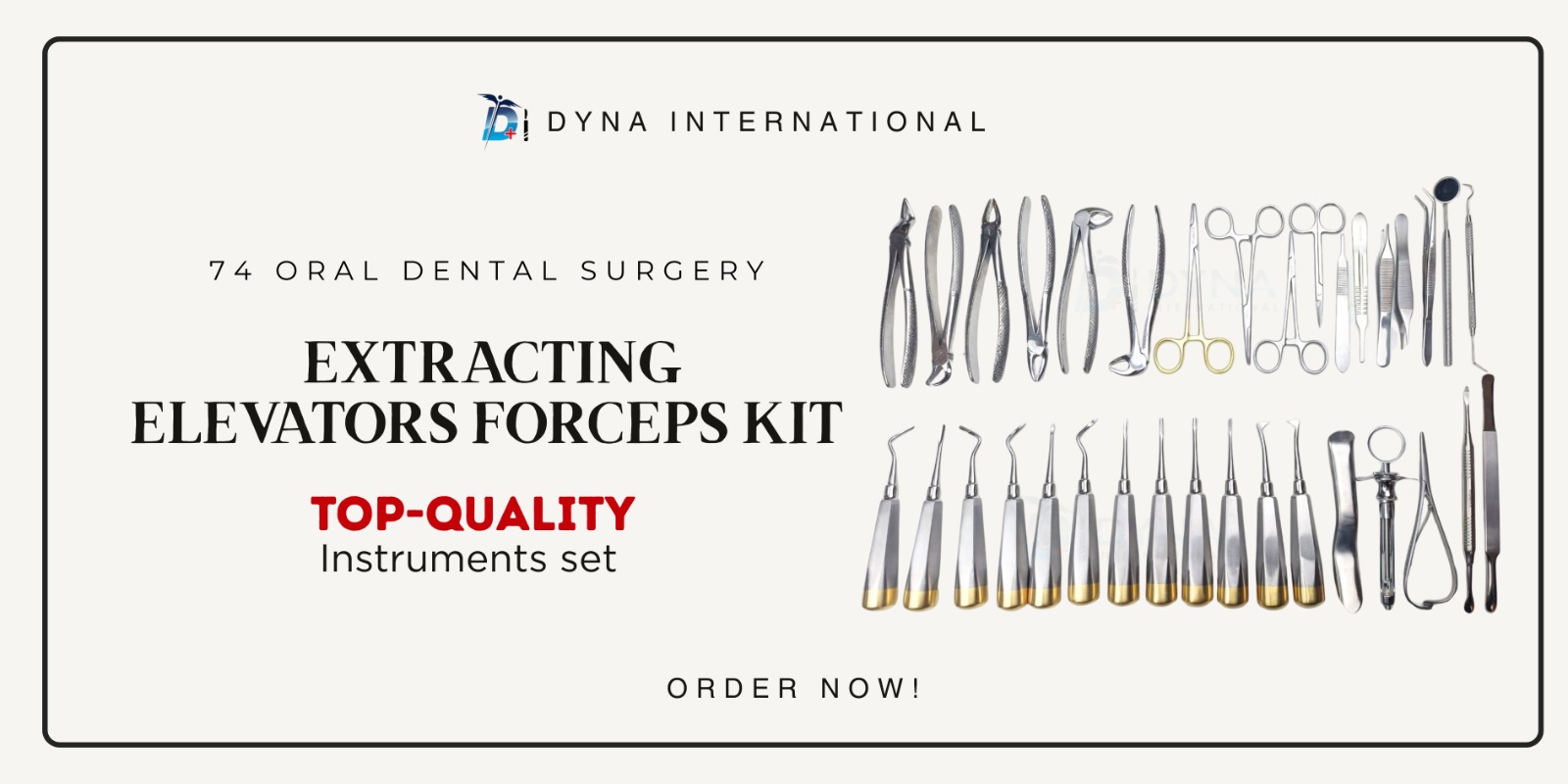
Mastering Dental Surgery: 74 Essential Dental Elevators & Forceps – Complete Guide for Dental Surgery
Understanding dental surgery requires not only knowledge but also practical skills. The mastery of instruments such as dental elevators and forceps is paramount for ensuring the best outcomes for patients. This guide covers 74 essential dental elevators and forceps, which will enhance your surgical repertoire and help in achieving precision in procedures.
Discover 74 essential dental elevators and forceps used in dental surgery. Learn their types, uses, and how to choose the right instruments for precision and efficiency. This is part of the 74 Essential Dental Elevators & Forceps – Complete Guide for Dental Surgery.
Through this comprehensive guide, you will gain insights into the various types of elevators and forceps, their specific applications in different dental scenarios, and how to effectively choose the right tools for your practice. Each section will provide detailed explanations and practical examples, ensuring you have a thorough understanding of each instrument’s role in dental surgery.
Dental surgery requires accuracy, control, and high-quality instruments. Among the most important tools are dental elevators and forceps, which play a critical role in tooth extractions and oral surgical procedures. Mastering these instruments improves clinical outcomes, reduces complications, and enhances patient comfort. The selection of appropriate instruments is crucial for the success of any dental procedure, as they directly influence the efficiency and safety of the surgery.
Why Elevators and Forceps Are Essential in Dental Surgery
In modern dentistry, elevators and forceps are fundamental for both simple and complex extractions. Elevators are used to loosen teeth and roots, while forceps ensure secure grip and controlled removal.
Understanding the mechanics of tooth extraction, for instance, is essential. Elevators are designed to be used in various anatomical situations and can be employed in both simple extractions and more complicated surgical cases. Choosing the correct elevator affects the ease of removal and minimizes trauma to surrounding tissues.
Using the right instruments:
-
- Improves procedural efficiency
Why the 74 Essential Dental Elevators & Forceps – Complete Guide for Dental Surgery is Crucial for Dentists
- Minimizes trauma to surrounding tissues
- Reduces risks of fractures and complications
For dental professionals, proper use of these tools ensures faster procedures and better patient recovery.
Overview of the 74 Essential Dental Elevators & Forceps
Exploring the 74 Essential Dental Elevators & Forceps – Complete Guide for Dental Surgery
Understanding the 74 Essential Dental Elevators & Forceps – Complete Guide for Dental Surgery
A complete set of dental elevators and forceps allows practitioners to handle a wide range of clinical situations with precision. These instruments are specifically designed for different tooth structures, positions, and extraction techniques, making them indispensable in every dental practice.
Understanding their correct application helps improve accuracy, safety, and overall surgical success.
Each dental elevator serves a unique purpose, from loosening teeth for extraction to removing fractured root fragments with precision. Selecting the right tool not only aids in the success of the procedure but also enhances patient comfort and recovery time.
Types of Dental Elevators and Their Uses
Dental elevators come in various designs, each with a specific function:
For example, straight elevators are essential in cases where teeth are firmly anchored and require a gentle rocking motion to dislodge. Their design allows for maximum leverage while ensuring minimal damage to the surrounding bone and soft tissues, highlighting the importance of using the correct tool for each specific situation.
- Straight Elevators – Loosen teeth and create space before extraction
- Periosteal Elevators – Reflect soft tissue and expose bone
- Root Tip Elevators – Remove fractured root fragments
- Cryer Elevators – Extract broken roots, especially molars
- Curved Elevators – Access posterior and hard-to-reach areas
Selecting the right type ensures efficient and atraumatic procedures.
Key Features of Dental Forceps
Dental forceps are designed for precision and control during extraction. Their main components include:
Forceps, on the other hand, are critical for grasping and removing teeth. The design of the beaks and the type of hinge mechanism can significantly affect the extraction process. For instance, molar forceps have curved beaks that fit around the contours of multi-rooted teeth, providing a secure grip during extraction.
- Beaks – Fit specific teeth for a secure grip
- Handles – Provide comfort and controlled force
- Hinges – Enable smooth and precise movement
Common examples:
- 150 Forceps – Upper anterior and premolars
- 151 Forceps – Lower anterior and premolars
- Molar Forceps (53, 17, 23) – Multi-rooted teeth
Using the correct forceps improves efficiency and reduces surgical risks.
How to Choose the Right Instruments
Choosing the right instrument also involves understanding the specific extraction techniques you will employ. Factors such as tooth anatomy and root structure play a key role in this decision. For example, understanding whether a tooth has a single root or multiple roots can inform the choice between different types of forceps.
Choosing the right instruments depends on:
- Procedure type – Simple or surgical extraction
- Tooth anatomy – Root structure and position
- Ergonomics – Comfort and grip control
- Material quality – Medical-grade stainless steel for durability
High-quality instruments ensure better performance, precision, and longevity.
Best Practices for Safe and Effective Use
For optimal results:
- Apply controlled, gradual force
- Ensure a firm and accurate grip
- Position instruments correctly for maximum leverage
- Maintain clear patient communication
These practices help achieve safe, efficient, and minimally traumatic procedures.
Maintenance and Sterilization
Regular maintenance of dental instruments is equally important. This involves not only cleaning post-use but also ensuring that the instruments are regularly inspected for damage. Proper sterilization procedures safeguard against infections and help maintain the integrity of the instruments, ensuring they remain effective for future use.
Proper instrument care is essential:
- Clean immediately after use
- Use ultrasonic cleaning systems
- Sterilize with autoclave methods
- Inspect regularly for wear or damage
This ensures infection control, durability, and consistent performance.
Future Trends in Dental Surgical Instruments
Advancements in dental instruments include:
- Ergonomic designs for improved control
- Enhanced stainless steel materials
- Digital precision tools
- Minimally invasive and laser-assisted techniques
These innovations are transforming dental surgery by improving accuracy, efficiency, and patient outcomes.
Conclusion
Mastering dental elevators and forceps is essential for successful dental surgery. By selecting the right instruments, following best practices, and maintaining proper sterilization, dental professionals can deliver safe, precise, and high-quality care while improving patient satisfaction.
As dental technology advances, staying updated on the latest instruments and techniques is vital. Innovations such as digital precision tools and laser-assisted surgery are becoming more prevalent in dental practices. By embracing these advancements, dental professionals can further enhance their surgical capabilities and improve patient outcomes.
In conclusion, mastering the use of dental elevators and forceps is imperative for success in dental surgery. This guide serves as a valuable resource for understanding the different instruments available and their specific applications. By adhering to best practices and keeping abreast of new advancements, dental professionals can ensure they provide the highest standard of care to their patients. With the knowledge gained from the 74 Essential Dental Elevators & Forceps – Complete Guide for Dental Surgery, practitioners will be well-equipped to handle a variety of dental procedures with confidence and skill.